On imagination, transformation and being audacious in your practice with Lily Xie
-

-

-


How does the work of urban planning and animation connect and how does one inform the other throughout your practice? In what ways do you make historically inaccessible concepts and language more culturally and socially accessible via your work?
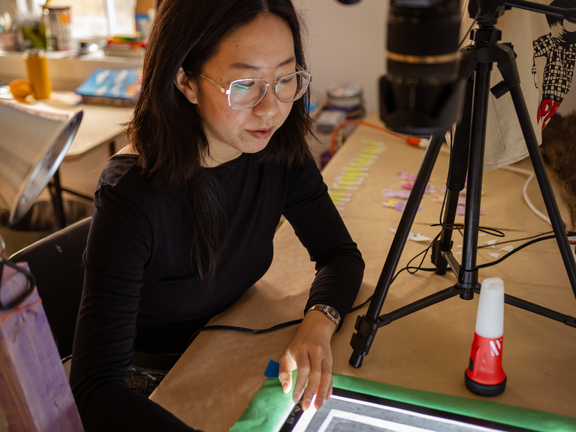
To me, urban planning is a discipline rooted in imagination and transformation: designing a city’s land use and built environment in order to shape the lives of people living there. This practice is highly political. Who gets the power to imagine and transform the city? I see parallels to animation, because animation is also at its core the practice of imagining transformation: breaking down a moving image into its component parts at 24 still frames per second. These two disciplines are conceptually tied in this way. I also see a lot of my work, animation, design, or otherwise, as political education and/or popular education.
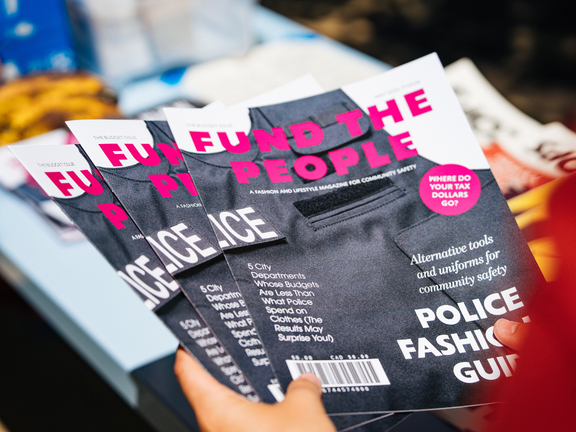
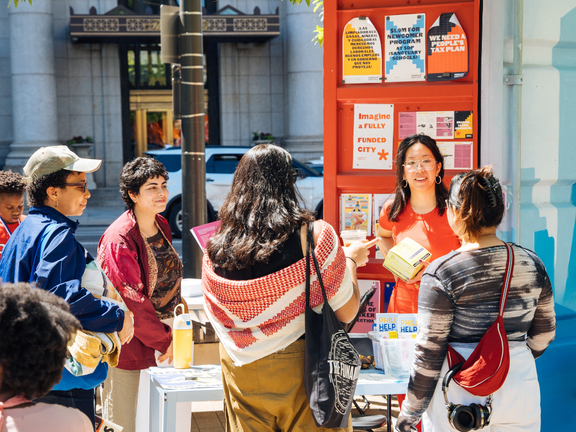
Within popular education frameworks, we recognize not only that we can learn about the systems that oppress us in order to liberate ourselves, but also that we have just as much to learn from one another as we do from the “teacher”. Many of my favorite projects have been rooted in PopEd methods: creating an animated short film with teens experiencing gentrification about what they want to build in their own neighborhoods, designing a magazine with abolitionist organizers about how to spend the City’s budget on community safety alternatives, and so on. I hope these projects can shed light on city or state processes while uplifting the voices of people traditionally left out of decision-making.
How does the city’s long-standing history of Black and Asian solidarity influence your work? Do you have any specific examples of those inspirations and how they have impacted your work?
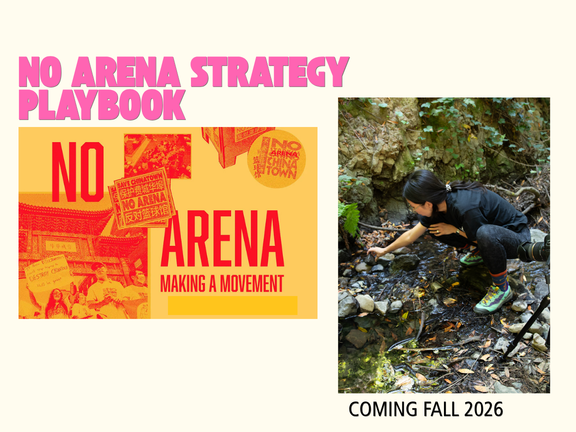
Philly is a city with a powerful history of Black and Asian solidarity and movement organizing. I am very much a student of this history. I remember learning about Yellow Seeds, a radical student organization in the 70s that published bilingual Chinese-English newspapers that emphasized solidarity among working class people of color. Their slogan was “Same Struggle, Same Fight”, and they highlighted the connections between the 70s Save Chinatown movement with the struggles of Black communities in Philly. Fast forward to the No Arena movement, and we saw Black communities showing up again to fight with Chinatown, to counteract the harmful narratives pitting Black against Asian communities, and to push back against billionaire developers who have destroyed both Black and Asian communities. It was deeply inspiring to see Black organizers from Save UC Townhomes come out to support No Arena, and speak about the ties between the wealthy developers of the UC Townhomes and 76 Place. There is a chapter in the No Arena Strategy Playbook specifically about cross-racial solidarity and how important it is to recognize that our liberations are intertwined.
What is a piece of advice you’d offer to emerging artists of color working at the intersection of art and social change?
I still very much feel like an “emerging” artist! My biggest piece of advice for new artists working in collaboration is to be attentive to what your collaborators need, and try to find the intersection with what you are able to joyfully offer. Especially when working with communities that are marginalized or extracted from, I’ve found it important to come from a place of “what do you need?” rather than “I want to do XYZ”. Some artists call the latter, parachuting in. However, I think it’s also important to not swing too hard in the direction of providing service for the sake of providing service; you also need to stay attuned to your own gifts, interests, and perspective. If the people you’re working with want a mural to make their community garden more beautiful, but you’re a filmmaker, how can you meet in the middle? Can you find a way to listen to what their needs really are (more beauty in the garden) with your offerings (maybe it’s a short film capturing the already beautiful day-to-day moments)?
A final piece to this is about consistency: I think it is important to keep showing up. Not just to things that concern you specifically, but also showing up without ulterior motives: to community meetings, clean up days, volunteer hours, cookouts, etc. Getting to know people, building trust, and giving back to the community are all necessary foundational pieces to any social practice project.
What words, gratitude, or intentions do you want to offer to the generations who came before you — and those who will come after?
Gratitude to the ancestors who came before me for daring to come together and experiment audaciously, knowing that they were likely to fail, and doing so anyway. I hope that future generations (future ancestors!) continue to carry the spirit of play, curiosity, and exploration, with the knowledge that no future is certain and “we make the road by walking”.
What projects are you working on currently and how can we support you?
I’m currently working on a Leeway-supported project, the No Arena Strategy Playbook. I’m working with organizers from Asian Americans United and the No Arena campaign to highlight strategy lessons from the movement to stop the construction of 76 Place. I hope that new organizers and people interested in getting involved in organizing can learn something and get inspired, and that we can record some of the reflections from this powerful fight. We are aiming to launch the playbook (for free, thanks to Leeway!) in the fall. You can support us by coming to pick up a copy then - stay tuned!